
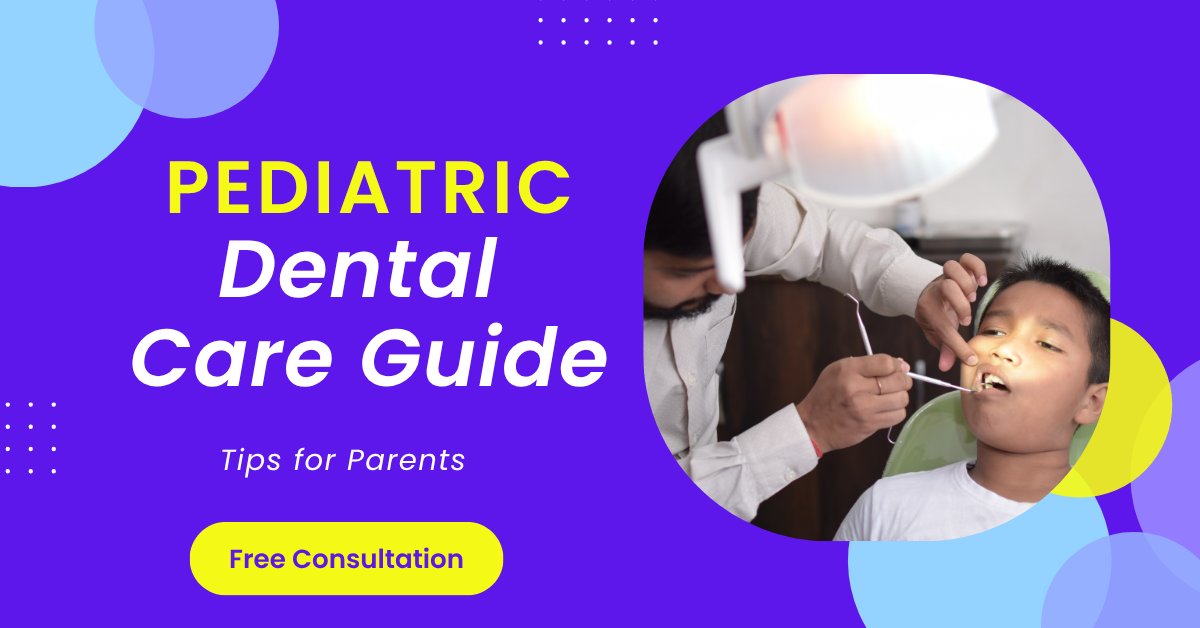
A Complete guide to children's dental care in Chromepet, Chennai - when to visit, common problems, treatments, costs, expert tips and answers to parent FAQs.
Companion guide to the Pediatric Dentist in Chromepet service page - this page covers the detail parents want before or after booking: what to expect, common problems, prevention, costs, and answers to nearly every question we hear from parents.
Table of Contents |
A pediatric dentist manages every stage of a child's oral development - from the first tooth eruption around six months, through the mix of baby and adult teeth in the early school years, up to the full permanent set by the mid-teens. This covers routine cleanings, cavity treatment, injury response, and monitoring how the jaw and bite are developing over time.
A general dentist treats patients of all ages. A pediatric dentist completes additional years of specialized training focused entirely on children - their behaviour, their anatomy, and the conditions unique to developing teeth. In practice, that shows up in smaller instruments, different anaesthesia dosing, and a communication style built for kids rather than adults.
The American Academy of Pediatric Dentistry and the Indian Dental Association both recommend a first visit by age one, or within six months of the first tooth appearing -whichever comes first. That sounds early to a lot of parents, but the point of that visit isn't treatment. It's setting a baseline and catching problems before they turn into pain.
Baby teeth hold space for permanent teeth, guide jaw growth, and support chewing and speech development during years that shape a child's nutrition and communication skills. A baby tooth lost too early to decay can cause the permanent tooth to come in crooked or misaligned.
Sealants, fluoride treatments, and routine cleanings cost far less - in money and in discomfort - than treating a cavity that's gone untreated for a year. Prevention is also where a child builds their relationship with dental visits; a kid who only sees the dentist for painful problems grows into an adult who avoids the dentist entirely.
Certain signs call for a visit sooner rather than at the next scheduled check-up:
The most common chronic disease in childhood worldwide. It starts small - a white or brown spot - and spreads quickly in baby teeth because their enamel is thinner than adult enamel.
A more severe, fast-moving form of decay often linked to prolonged bottle use, especially bottles given at bedtime with milk or juice. It can affect multiple front teeth at once.
Caused by genetics, early loss of baby teeth, thumb sucking, or simply not enough room in the jaw. Left unaddressed, it can complicate chewing, speech, and self-confidence as the child gets older.
Less common in young children but does show up, usually linked to poor brushing habits or, in some cases, mouth breathing.
Often a sign of enamel wear or an early cavity, especially if a child reacts to cold drinks or ice cream.
Falls, bike accidents, and contact sports account for a large share of pediatric dental visits. A knocked-out or chipped tooth needs same-day attention.
Usually harmless and resolve on their own, but recurring ulcers are worth mentioning at a check-up.
An overbite, underbite, or crossbite that develops during childhood is easier and cheaper to correct early, before jaw growth finishes.
Routine Dental Check-up - A full exam of teeth, gums, and jaw development, usually every six months.
Dental Cleaning - Removes plaque and tartar buildup that brushing at home doesn't fully clear.
Fluoride Application - A quick, painless treatment that strengthens enamel and helps resist decay.
Pit and Fissure Sealants - A thin protective coating applied to the chewing surfaces of molars, where cavities most often start.
Tooth-Coloured Fillings - Treat cavities while matching the natural tooth shade - no metal fillings visible when a child smiles.
Stainless Steel Crowns - A durable option for baby molars with extensive decay, built to last until the tooth naturally falls out.
Pulpotomy - Removes infected pulp tissue from the crown of a baby tooth while preserving the healthy root.
Pulpectomy - A more involved version of a pulpotomy, used when infection has spread into the root canal of a baby tooth.
Space Maintainers - Hold open the gap left by an early lost tooth, preventing neighbouring teeth from drifting into the space meant for a permanent tooth.
Habit Breaking Appliances - Custom devices designed to help a child stop thumb sucking or tongue thrusting before it affects their bite permanently.
Laser Pediatric Dentistry - Used for certain soft tissue procedures with less bleeding and faster healing than traditional methods.
Sedation Dentistry - For children who are especially anxious or need multiple procedures in one visit, mild sedation keeps them relaxed and comfortable.
Emergency Pediatric Dentistry - Same-day care for knocked-out teeth, fractures, sudden pain, or swelling.
Digital X-rays - Low-radiation imaging that gives a clear view of tooth development below the gumline.
Intraoral Scanner - Captures a detailed 3D image of a child's mouth without the discomfort of traditional impression material.
Laser Dentistry - Used for select soft-tissue procedures, reducing bleeding, swelling, and recovery time.
Rotary Endodontics - Faster, more precise root canal treatment when a baby tooth's pulp is infected.
Child-Friendly Dental Chairs - Sized and adjusted for smaller bodies.
Sterilisation Protocol - Every instrument goes through a strict cleaning and sterilization cycle between patients, following recognized infection-control standards.
Childhood tooth decay is more common than most parents assume. Research reviewing global data puts early childhood caries at close to half of all preschool-age children worldwide, making it one of the most widespread chronic conditions in this age group. In India specifically, studies on 12-year-olds have found decay rates ranging broadly across regions - in some areas well over half of children affected - a wide gap compared to countries with stronger preventive dental habits.
The World Health Organization has also flagged untreated childhood decay as a significant, largely preventable burden - global estimates put the number of children with untreated cavities in primary teeth well into the hundreds of millions. That scale matters because nearly all of it is preventable through routine check-ups, sealants, fluoride, and basic home care.
Dental pain is also a leading reason children miss school days, though exact figures vary by country and study. The pattern holds regardless of location: a child in pain doesn't focus in class, and repeated dental problems chip away at attendance over a school year.
(Sources: World Health Organization - Ending Childhood Dental Caries implementation manual; peer-reviewed research on global and Indian childhood caries prevalence; American Academy of Pediatric Dentistry and Indian Dental Association clinical guidance.)
Expert Advice
|
"The biggest mistake I see parents make isn't skipping brushing - it's waiting too long for the first visit. By the time a child is in pain, we're usually looking at a filling or worse. A five-minute check-up at age one costs nothing compared to that." - Pediatric Dentist, Smile Solution Family Dentistry |
Myth: Baby teeth don't matter since they fall out anyway. Fact: Healthy baby teeth guide permanent teeth into their correct positions and support proper jaw development. Losing them early to decay can cause lasting alignment problems.
Myth: Thumb sucking is harmless. Fact: It's normal in infants, but if it continues past age 3–4, it can shift teeth and affect the shape of the palate.
Myth: Kids don't need X-rays. Fact: Digital X-rays use very low radiation and often catch decay between teeth that isn't visible during a regular exam.
Myth: Sugar-free snacks are always safe for teeth. Fact: Many "sugar-free" foods still contain acids or starches that contribute to decay. Frequency of snacking matters as much as sugar content.
|
Feature |
Pediatric Dentist |
General Dentist |
|
Child Behaviour Training |
Extensive, specialized training |
Limited or none |
|
Children's Treatments |
Core focus of practice |
Occasional, not primary focus |
|
Preventive Care |
Tailored to developing teeth |
General preventive approach |
|
Growth Monitoring |
Tracks jaw and bite development over years |
Not typically a focus |
|
Sedation |
Trained in pediatric-specific dosing and protocols |
Often not equipped for children |
Treatment cost depends on several variables, and no two children need exactly the same care:
We don't publish fixed prices online because treatment plans are genuinely individual - a quote after examination gives you an accurate number instead of a misleading estimate.
Insurance & Payment: We accept select health insurance plans that cover pediatric dental treatment, and offer EMI options for larger treatment plans. Contact us to confirm your specific policy.
1. When should my child first visit a pediatric dentist?
By their first birthday, or within six months of their first tooth appearing - whichever happens first.
2. How often should children have dental check-ups?
Every six months, similar to adults, unless your dentist recommends a different schedule based on your child's needs.
3. Are dental X-rays safe for children?
Yes. Digital X-rays use significantly less radiation than older film-based machines, and they're only taken when necessary.
4. What causes cavities in children?
A combination of sugary or starchy foods, insufficient brushing, and bacteria that convert sugar into acid, which wears down enamel over time.
5. Is fluoride safe for kids?
Yes, in the amounts used in pediatric dentistry. It strengthens enamel and helps prevent decay when applied or used in appropriate doses.
6. How can I prevent tooth decay in my child?
Brush twice daily, limit sugary snacks between meals, avoid bedtime bottles with milk or juice, and keep up with six-monthly check-ups.
7. What if my child is afraid of the dentist?
Tell us in advance. We adjust our pace, use distraction techniques, and in some cases spread treatment across shorter visits to build comfort gradually.
8. What is a space maintainer?
A small device that holds open the gap left by an early lost baby tooth, so nearby teeth don't drift into the space meant for the permanent tooth.
9. Are thumb-sucking habits harmful?
Only if they continue past age 3–4. At that point, they can start affecting tooth alignment and jaw shape.
10. Do baby teeth need fillings if they're going to fall out anyway?
Yes. Untreated decay in baby teeth can cause pain, infection, and problems for the permanent teeth developing underneath.
11. What foods are good for healthy teeth?
Dairy, crunchy vegetables, and water-rich fruits support strong teeth. Limiting sticky, sugary snacks matters just as much as what you add.
12. How should I clean my baby's teeth?
Wipe gums with a clean, damp cloth before teeth appear. Once teeth erupt, use a soft infant toothbrush with a rice-grain amount of fluoride toothpaste.
13. When do permanent teeth start appearing?
Usually starting around age 6, with the full set typically in place by the early-to-mid teens.
14. What should I do after a tooth injury?
Contact us immediately. For a knocked-out permanent tooth, keep it moist (in milk if possible) and get to the clinic within 30 minutes if you can.
15. Do you provide emergency pediatric dental care?
Yes. We keep emergency appointment slots available and can be reached for urgent after-hours concerns.
16. Does my child need a mouthguard for sports?
If they play any contact sport, yes. A custom-fitted mouthguard reduces the risk of chipped or knocked-out teeth significantly compared to no protection or a generic store-bought one.
17. Why does my child grind their teeth at night?
It's common in children and often outgrown on its own. If it's severe or wearing down teeth, we can assess whether an appliance is needed.
18. Can my child eat before a dental appointment?
Yes, unless sedation is planned, in which case we'll give you specific fasting instructions beforehand.
|
Ready to Book? Head back to our pediatric dentist service page to book an appointment, or reach out directly: |
.png)
.png)