
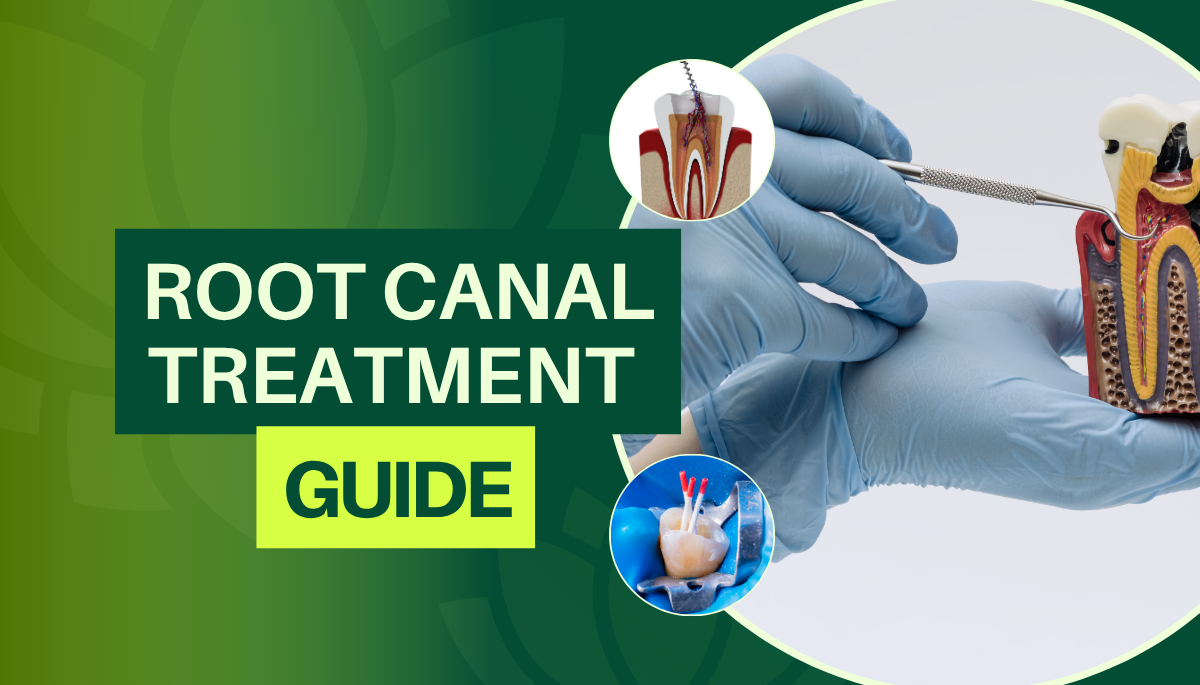
Root canal treatment guide for Chromepet: signs, procedure steps, recovery tips, costs, myths & FAQs answered by experienced dentists. Book online today.
Looking to book an appointment? Visit our Root Canal Treatment page for cost estimates, clinic details, and to schedule a visit. This guide covers the details - signs, causes, procedure, recovery, and answers to nearly everything patients ask before treatment.
What Is Root Canal Treatment?
A tooth isn't solid all the way through. Under the hard enamel and dentin sits a soft core called the pulp - a bundle of nerves and blood vessels that runs down into the roots. When bacteria work their way into that pulp, usually through a deep cavity, a crack, or a failed filling, the tooth gets infected. Left alone, that infection causes pain, swelling, and eventually an abscess.
Root canal treatment clears out the infected pulp, disinfects the space inside the tooth, and fills it with a biocompatible material so bacteria can't get back in. The tooth stays in your mouth, functioning more or less like it always did, instead of being pulled out.
Once the infected tissue is out and the canal is sealed, the tooth can no longer get reinfected from the inside. It's held in place by the same bone and ligament as before, so it still bites, chews, and looks natural - something an artificial replacement can't fully match, even a good one.
Anyone with an infection that's reached the pulp - deep untreated cavities, a tooth cracked toward the root, or a tooth that's had several fillings over the years and finally given out. If a toothache keeps you up at night, worsens on biting, or comes with facial swelling, it's time to see a dentist, not wait it out.
Persistent tooth pain. Pain that comes and goes for a few days, then settles into a constant dull ache, usually points to an infected or inflamed pulp.
Sensitivity to hot and cold. A quick zing from ice water is normal. Pain that lingers 30 seconds or more after the hot or cold is gone usually means something deeper is going on.
Swollen gums. A tender, puffy bump near the base of a tooth - sometimes it looks like a small pimple - often means an infection is draining through the gum.
Tooth discolouration. A tooth that's gone grey or dark compared to the ones next to it usually means the internal tissue has died.
Pain while chewing. Sharp pressure sensitivity on one specific tooth often means the infection has reached the ligament holding the tooth in the bone.
Dental abscess. A pocket of pus at the root tip causes throbbing pain, swelling, sometimes a bad taste, and occasionally fever. This is one of the more urgent signs.
Worth knowing: not every sign shows up together, and some infected teeth don't hurt at all until the problem is fairly advanced. That's part of why routine check-ups catch things patients wouldn't notice on their own.
Dental infections are one of the more common reasons people end up in an emergency room for a condition that could have been treated quickly at a dental clinic if caught early. If a toothache lasts more than two days, get it checked rather than waiting for it to pass.
Dr. M. Srikanth, BDS / MDS (Endodontics)
Experience: 25+ years treating root canal cases, from routine single-visit procedures to re-treatment of teeth that failed elsewhere.
Special Interests: Complex canal anatomy, single-visit endodontics, treatment for anxious patients.
Treatment Philosophy: Explain what's happening before doing it, avoid pushing unnecessary work, and treat every canal like it's the only one that matters - because for that patient, it is.
|
Feature |
Root Canal |
Tooth Extraction |
|
Keeps natural tooth |
Yes |
No |
|
Chewing function |
Restored to near-normal |
Needs a bridge or implant to restore |
|
Appearance |
Looks and feels natural |
Gap needs replacement to avoid shifting teeth |
|
Long-term cost |
One procedure, occasional crown replacement |
Extraction plus later cost of a bridge or implant |
|
Effect on nearby teeth |
Minimal |
Neighbouring teeth can shift into the gap over time |
|
Recommended when |
Enough healthy tooth structure remains |
Tooth is fractured beyond repair or has severe bone loss |
For most infected teeth with enough healthy structure left, root canal treatment beats extraction - keeping your own tooth almost always works out better long-term, functionally and financially.
The tooth is usually already causing pain before treatment starts - that's what brings most patients in. The procedure itself, done under local anaesthesia, isn't the painful part. Most patients describe it as similar to getting a deep filling: some pressure, no sharp pain.
Modern pain management: local anaesthesia numbs the area completely before treatment begins, and rotary instruments have made the process faster and gentler than older methods.
After treatment: mild soreness for a day or two is normal, especially when biting directly on the tooth. Over-the-counter pain relief, as advised by your dentist, usually manages this without trouble.
A dentist's perspective: "Patients often tell us afterward that the appointment was easier than they expected - the worst part was usually the days of pain leading up to it, not the treatment itself."
First 24 hours - some tenderness around the tooth and gum is normal. Avoid chewing on that side until numbness wears off completely, so you don't accidentally bite your cheek or tongue.
Foods to eat - soft foods like rice, dal, soups, mashed vegetables, and yoghurt are easiest on a freshly treated tooth for the first day or two.
Foods to avoid - hard, crunchy, or sticky foods (nuts, ice, hard chikki, chewing gum) can stress the tooth before the permanent crown is placed.
Oral care - keep brushing and flossing normally, just be gentle around the treated area, and avoid biting hard on that tooth until the crown is fitted.
When to contact your dentist - swelling that worsens instead of improving, pain that doesn't ease after a couple of days, or a bad taste from the tooth all mean it's time to call.
|
Myth |
Fact |
|
Root canals are extremely painful |
Modern anaesthesia and technique make the procedure no more uncomfortable than a deep filling |
|
It's better to just remove the tooth |
Keeping a natural tooth almost always works out better than extraction, for both chewing and cost |
|
Root canal treatment causes illness elsewhere in the body |
There's no credible scientific evidence linking properly performed root canal treatment to disease elsewhere in the body |
|
A treated tooth doesn't need a crown |
Most teeth need a crown afterward, since they become more brittle without their internal blood supply |
|
One visit is always enough |
Some cases genuinely need two or more visits, especially with active infection or complex canal anatomy |
|
Pain after treatment means it failed |
Mild soreness for a day or two is normal and expected as the area heals |
What is root canal treatment?
A procedure that removes infected or inflamed tissue from inside a tooth, then cleans and seals the space, so the natural tooth can be saved instead of removed.
How long does a root canal take?
Usually, 45 to 90 minutes per sitting, depending on the tooth and how many canals it has.
Can I eat after treatment?
Yes, but stick to soft foods and avoid chewing on that side until the numbness wears off and the tooth has had time to settle.
Can a root canal fail?
It's uncommon, but reinfection can happen, especially if the crown is delayed or the seal is compromised. Re-treatment is usually possible.
Can children undergo root canal treatment?
Children with fully developed permanent teeth can undergo standard treatment. Baby teeth sometimes need a different, simpler procedure - your dentist will advise based on the tooth.
Is root canal treatment safe during pregnancy?
Yes, it's generally considered safe, particularly in the second trimester, with precautions around X-rays and medication. Always mention your pregnancy to your dentist beforehand.
What happens if I delay root canal treatment?
The infection can spread, pain usually worsens, and in some cases the tooth becomes too damaged to save, leading to extraction instead.
Can I return to work the same day?
Most patients do, especially with a straightforward case. Some prefer to rest for the remainder of the day if there's mild soreness.
How do I know if I need emergency root canal treatment?
Severe, throbbing pain, visible facial or gum swelling, or fever alongside tooth pain are signs that warrant an urgent visit rather than a routine appointment.
Ready to book, or want a cost estimate for your specific case? Visit our Root Canal Treatment page to schedule a consultation.
.png)

.png)