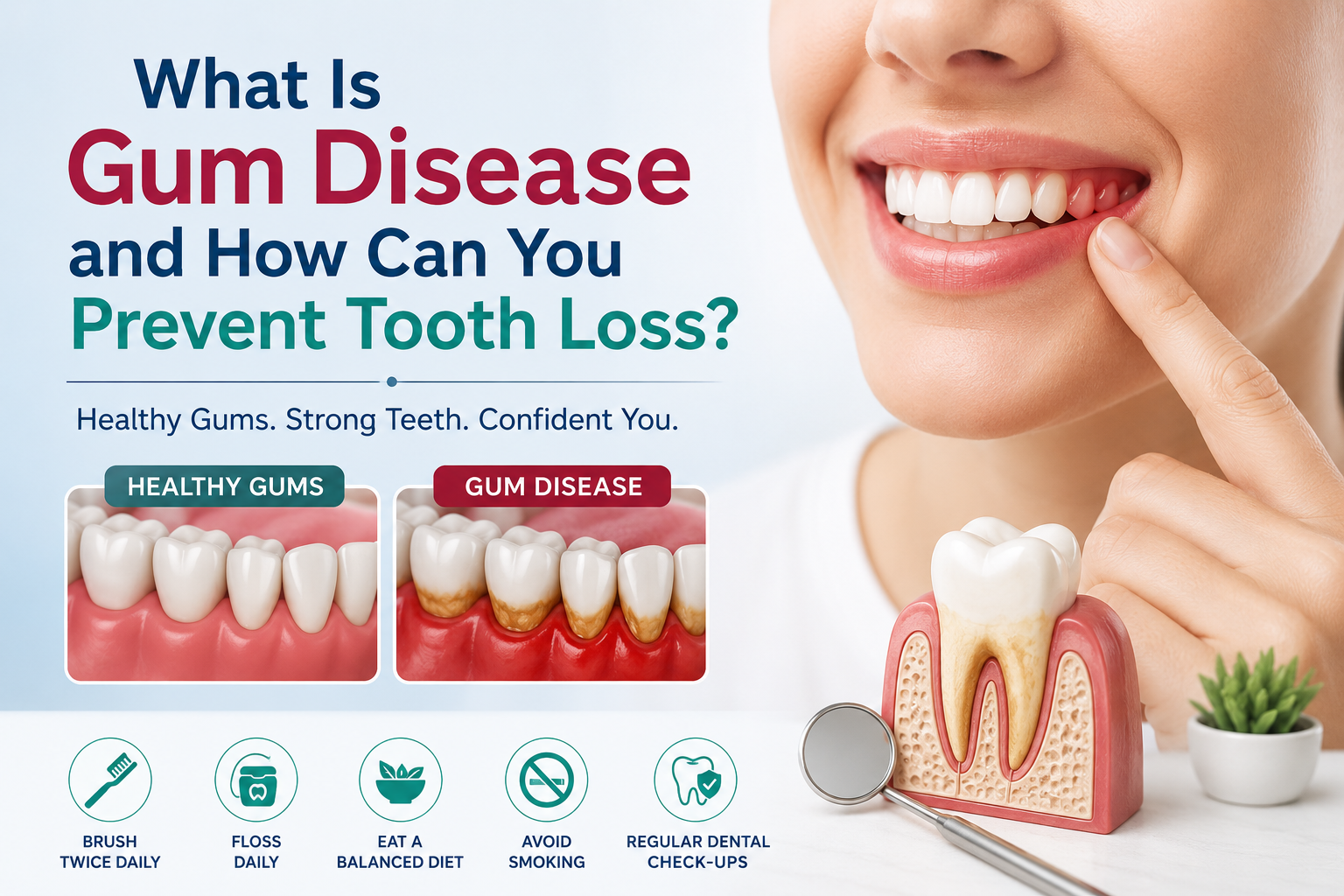
Gum disease is a common oral infection that can cause tooth loss. Learn its symptoms, causes, and simple ways to prevent it.gum disease
Gums that bleed while brushing or flossing should never be ignored. Swollen gums, persistent bad breath, or gum tenderness may be early warning signs of gum disease — a common oral infection that can silently damage your teeth and gums over time. If left untreated, gum disease may lead to loose teeth, tooth loss, and even affect overall health.
The good news is that gum disease is largely preventable with proper oral care and regular dental check-ups. In this blog, we’ll explore the symptoms, causes, stages, and effective ways to prevent gum disease and protect your smile.
What is Gum Disease?
Gum disease, also called periodontal disease, is a bacterial infection that affects the gums and supporting structures around the teeth. It develops when plaque — a sticky layer of bacteria — builds up on the teeth and gums.
When plaque is not removed through proper brushing and flossing, bacteria begin to irritate the gums, causing inflammation and infection. In the early stages, gums may become red, swollen, and bleed easily. As the condition progresses, the gums may pull away from the teeth, forming infected pockets that can eventually lead to tooth loss.
Common Symptoms of Gum Disease
The earliest stage of gum disease is known as gingivitis. Some common signs include:
In advanced stages, gum disease may continue damaging the gums and bone without causing noticeable pain. This is why routine dental check-ups are important for early diagnosis and treatment.
What Causes Gum Disease?
The primary cause of gum disease is plaque buildup on the teeth. If plaque is not removed daily, harmful bacteria multiply and infect the gums, leading to inflammation and tissue damage.
Several factors can increase the risk of developing gum disease, including:
Types of Gum Disease
Gingivitis
Gingivitis is the mildest and most common form of gum disease. It causes gum redness, swelling, and bleeding, but does not usually affect the bone. With good oral hygiene and professional cleaning, gingivitis can often be reversed.
Periodontitis
If gingivitis is left untreated, it may progress to periodontitis. In this stage, the gums pull away from the teeth, creating deep pockets that collect bacteria and infection. This can damage the supporting bone and tissues around the teeth.
Necrotising Periodontal Disease
This is a severe form of gum infection that causes painful ulcers, tissue damage, and gum decay. Immediate dental care is essential to prevent rapid destruction of gum tissue and bone.
Early treatment is important because each stage of gum disease becomes more difficult to manage as it progresses.
How to Prevent Gum Disease Naturally
Maintaining good oral hygiene is the best way to prevent gum disease and protect your teeth. Here are some simple but effective preventive tips:
Brush Twice Daily
Brush your teeth thoroughly twice a day using a soft-bristle toothbrush. Pay extra attention to the gum line, where plaque tends to accumulate.
Floss Every Day
Flossing helps remove food particles and plaque from areas that brushing cannot reach, especially between teeth and below the gum line.
Limit Sugary and Acidic Foods
Sugary snacks and acidic drinks encourage bacterial growth and weaken oral health. Reduce the intake of sodas, candies, and acidic foods to protect your gums.
Quit Smoking
Smoking weakens the immune system and significantly increases the risk of gum disease. Quitting tobacco products can greatly improve gum health.
Visit Your Dentist Regularly
Professional dental cleanings remove hardened plaque and tartar that cannot be cleaned at home. Regular dental check-ups also help identify gum problems early.
Summary
Gum disease is a common but preventable condition that develops gradually due to plaque buildup and bacterial infection. Without proper care, it can damage the gums and supporting bone and eventually lead to tooth loss.
By practising daily brushing and flossing, eating a healthy diet, avoiding tobacco, and scheduling regular dental visits, you can maintain healthy gums and a confident smile for years to come.
If you are experiencing symptoms of gum disease, seeking professional dental care early can help prevent serious complications and restore your oral health.
FAQs
What are the first signs of gum disease?
The early signs include red or swollen gums, bleeding during brushing or flossing, bad breath, and gum sensitivity.
What causes gum disease?
Gum disease is mainly caused by plaque buildup on the teeth due to poor oral hygiene.
Can gum disease lead to tooth loss?
Yes, untreated gum disease can damage the supporting tissues and bone around the teeth, eventually causing tooth loss.
How can I prevent gum disease naturally?
Brush twice daily, floss regularly, avoid smoking, reduce sugary foods, and visit your dentist for routine cleanings.
Can gum disease be treated?
Yes, early-stage gum disease can often be reversed with proper oral hygiene and professional dental care. Advanced cases may require specialised treatment procedures.