
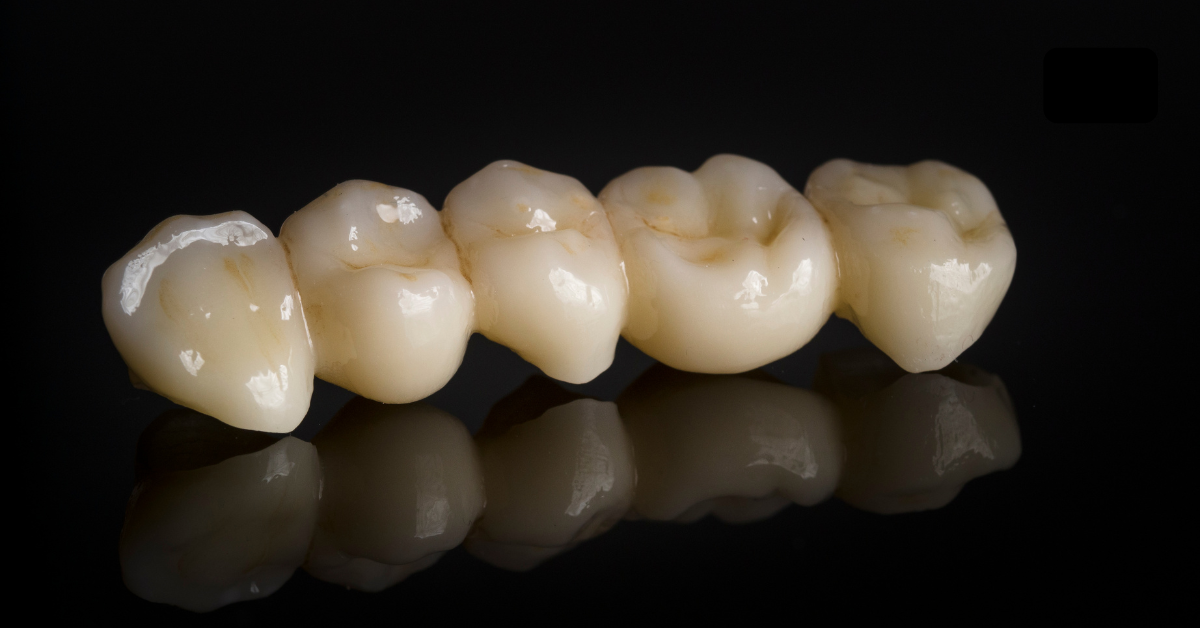
Find zirconia teeth price in India for 2026, including zirconia crown cost per tooth, types, price factors, procedure, durability and FAQs.
If you're looking for zirconia teeth price in India, you're most likely asking about the cost of a zirconia dental crown - the term "zirconia teeth" is commonly used by patients even though the treatment itself is a crown or restoration placed over an existing tooth or implant. On average, a single zirconia crown in India costs somewhere between ₹8,000 and ₹25,000 per tooth, with entry-level options starting around ₹6,500 in some clinics and premium, high-aesthetic CAD/CAM zirconia going upward of ₹25,000–₹35,000 in metro cities. Multiple restorations, high-aesthetic zirconia, or implant-supported crowns will cost more. Because pricing varies so widely across India, the only way to get an accurate number for your specific case is a dental examination and treatment plan.
This guide breaks down what "zirconia teeth" actually means, how much they typically cost, what affects the price, and everything else you should know before making a decision.
Here's a general breakdown of what to expect:
|
Zirconia Restoration |
Approximate Cost |
|
Entry-level zirconia crown |
₹6,500 – ₹10,000 per tooth |
|
Standard zirconia crown |
₹9,000 – ₹16,000 per tooth |
|
Premium / high-aesthetic zirconia (CAD/CAM) |
₹15,000 – ₹25,000+ per tooth |
|
Multiple zirconia crowns |
₹8,000 – ₹25,000 per tooth (volume pricing may apply) |
|
Additional treatment (root canal, implant, core buildup, etc.) |
Charged separately, depending on requirement |
These figures are indicative only. Your final cost will depend on factors specific to your case, which we cover below.
Zirconia crown pricing isn't uniform nationwide, and there are good reasons for that:
Because of this spread, a single "India-wide average" isn't especially meaningful - it's better to understand the range and the factors that push your case toward one end of it.
"Zirconia teeth" is a patient-friendly term, not a clinical one. It's commonly used to refer to zirconia dental crowns or zirconia restorations rather than an entirely new set of teeth. It helps to understand the different situations this term can actually refer to.
A zirconia crown is used to restore and protect an existing natural tooth — typically one that's damaged, decayed, cracked, or has undergone root canal treatment. The crown fits over the remaining tooth structure.
When a tooth is missing entirely, a dental implant is placed to replace the tooth root, and a zirconia crown is then attached on top as the final, visible restoration. This is a different treatment pathway from restoring a natural tooth and is usually priced separately from a standard crown.
In select cases, a full arch of teeth can be restored using a zirconia-based prosthesis supported by multiple implants. This is a more extensive treatment with a correspondingly different pricing structure.
Several clinical and logistical factors influence what you'll pay:
|
Factor |
Why It Matters |
|
Type of zirconia |
Different grades have different strength, aesthetics, and cost |
|
Number of teeth |
More restorations increase total cost |
|
Natural tooth condition |
Additional treatment may be needed before the crown is placed |
|
Root canal treatment |
May be required in some cases before crown placement |
|
Implant requirement |
Implant-supported restorations involve additional surgical and material costs |
|
Laboratory |
Fabrication quality and precision affect the price |
|
Digital technology |
Scanning, digital design, and fabrication methods can influence cost |
|
Case complexity |
More complex bite or alignment issues may need additional planning |
|
Location |
Prices vary between cities and individual clinics |
Not all zirconia crowns are the same. The type used affects both appearance and price.
Made from a single solid block of zirconia, monolithic crowns are known for their strength and durability. They're commonly used for back teeth, where chewing forces are higher, and tend to sit at a more accessible price point within the zirconia range.
This type is engineered for a more natural, tooth-like appearance, making it a popular choice for front teeth and visible areas of the smile. The improved aesthetics typically come with a slightly higher cost than standard monolithic zirconia.
Layered crowns combine a strong zirconia base with an additional ceramic layer on top for enhanced aesthetics. This offers a natural look with good strength, though the layered ceramic can be more prone to minor chipping compared to fully monolithic designs.
Zirconia is one of several crown materials available. Here's how it generally compares:
|
Feature |
Zirconia |
Ceramic (Emax) |
PFM (Porcelain-Fused-to-Metal) |
Metal |
|
Appearance |
Excellent |
Excellent |
Good |
Limited |
|
Strength |
High |
Moderate–High |
High |
Very High |
|
Metal-free |
Yes |
Yes |
No |
No |
|
Typical use |
Front/back depending on case |
Aesthetic cases |
General restoration |
Selected cases |
|
Approximate cost |
₹8,000 – ₹25,000+ |
₹12,000 – ₹20,000 |
₹4,000 – ₹8,000 |
₹3,000 – ₹6,000 |
Zirconia isn't automatically the "best" choice for every patient. Your dentist will recommend a restoration type based on the specific tooth, your bite, aesthetic priorities, and overall clinical condition.
There's no single, fixed "India price" for zirconia crowns. As mentioned earlier, cost depends on:
If you're specifically considering zirconia crowns in Chennai, the same variables apply locally — and the only way to get a reliable number is a consultation and treatment plan tailored to your tooth or teeth.
Zirconia crowns are popular for a combination of reasons:
That said, zirconia can be a suitable option for many patients, but the appropriate restoration ultimately depends on the tooth and individual clinical requirements. It isn't automatically the right - or only - choice for everyone.
Teeth that are chipped, fractured, or structurally compromised may need a crown to restore shape and function.
When decay has progressed too far for a filling alone, a crown can protect what remains of the natural tooth.
Teeth that have undergone root canal treatment are often more brittle and may need a crown for long-term protection.
Teeth worn down from grinding, acid erosion, or age may benefit from a crown to restore shape and bite function.
An older or failing crown (metal, PFM, or otherwise) may be replaced with zirconia for improved aesthetics or durability.
In every case, the decision is based on a proper diagnosis — not on the material alone.
Longevity depends on several factors, including:
There's no single fixed lifespan that applies to every patient - durability varies based on how well the crown is cared for and individual oral conditions.
Zirconia crowns don't require anything drastically different from normal dental care:
These two are often confused, so it's worth clarifying the difference:
|
Zirconia Crown |
Dental Implant |
|
Restores an existing tooth |
Replaces a missing tooth root |
|
Requires remaining tooth structure |
Used when a tooth is missing entirely |
|
Usually a simpler, non-surgical treatment |
A surgical treatment |
|
Priced as a standalone restoration |
Priced as a full implant treatment |
Importantly, these aren't mutually exclusive - a dental implant often has a zirconia crown placed on top as its final, visible restoration. In that case, the zirconia crown is one part of a larger implant treatment.
If you're based in or around Chennai and Chromepet, here's what the process typically looks like:
We provide zirconia crown treatment for patients visiting our Chennai/Chromepet clinic, with pricing confirmed only after an in-person assessment.
Zirconia crown prices in India typically range between ₹8,000 and ₹25,000 per tooth, though the exact cost depends on the city, clinic, material, and complexity of your case. Premium, high-aesthetic zirconia in metro clinics can go higher, up to around ₹35,000 per tooth.
A single zirconia crown generally costs between ₹8,000 and ₹25,000, depending on the type of zirconia used, whether it's entry-level, standard, or premium CAD/CAM, and your specific treatment needs.
Neither is universally "better" - zirconia tends to offer higher strength, while ceramic is often chosen for specific aesthetic needs. The right choice depends on the tooth being treated and your priorities.
They refer to the same thing in most everyday use. "Zirconia teeth" is the term patients commonly use, while "zirconia crown" is the clinical term for the restoration placed over a tooth or implant.
With good oral hygiene and regular dental visits, zirconia crowns can last many years, though the exact duration varies from patient to patient based on care and bite forces.
Yes, especially high-translucency zirconia, which is designed to closely mimic the natural appearance of front teeth.
Yes, monolithic zirconia is particularly well-suited to back teeth due to its strength and ability to withstand chewing forces.
Not always. Whether root canal treatment is needed depends on the condition of the underlying tooth, not on the crown material itself.
Yes, zirconia crowns are commonly used as the final restoration placed on top of a dental implant.
Price differences typically come down to the material and grade of zirconia used, the laboratory involved, the dentist's expertise, the technology used for scanning and fabrication, and the overall complexity of the treatment.
Considering zirconia teeth or crowns in Chennai? A dental examination can help determine the most suitable restoration for your tooth and provide an accurate treatment estimate.
.png)