Practical dental care tips for children and parents: brushing, fluoride, diet, first visit, sealants and habits. Expert guide by Dr. M. Srikanth, Chrompet, Chennai.
By Dr. M. Srikanth, BDS, MDS (Prosthodontics) | Smile Solutions, Chrompet, Chennai | Reg. No. 5487 (Tamil Nadu State Dental Council) | Updated 20 November 2026
Quick Answer (TL;DR)
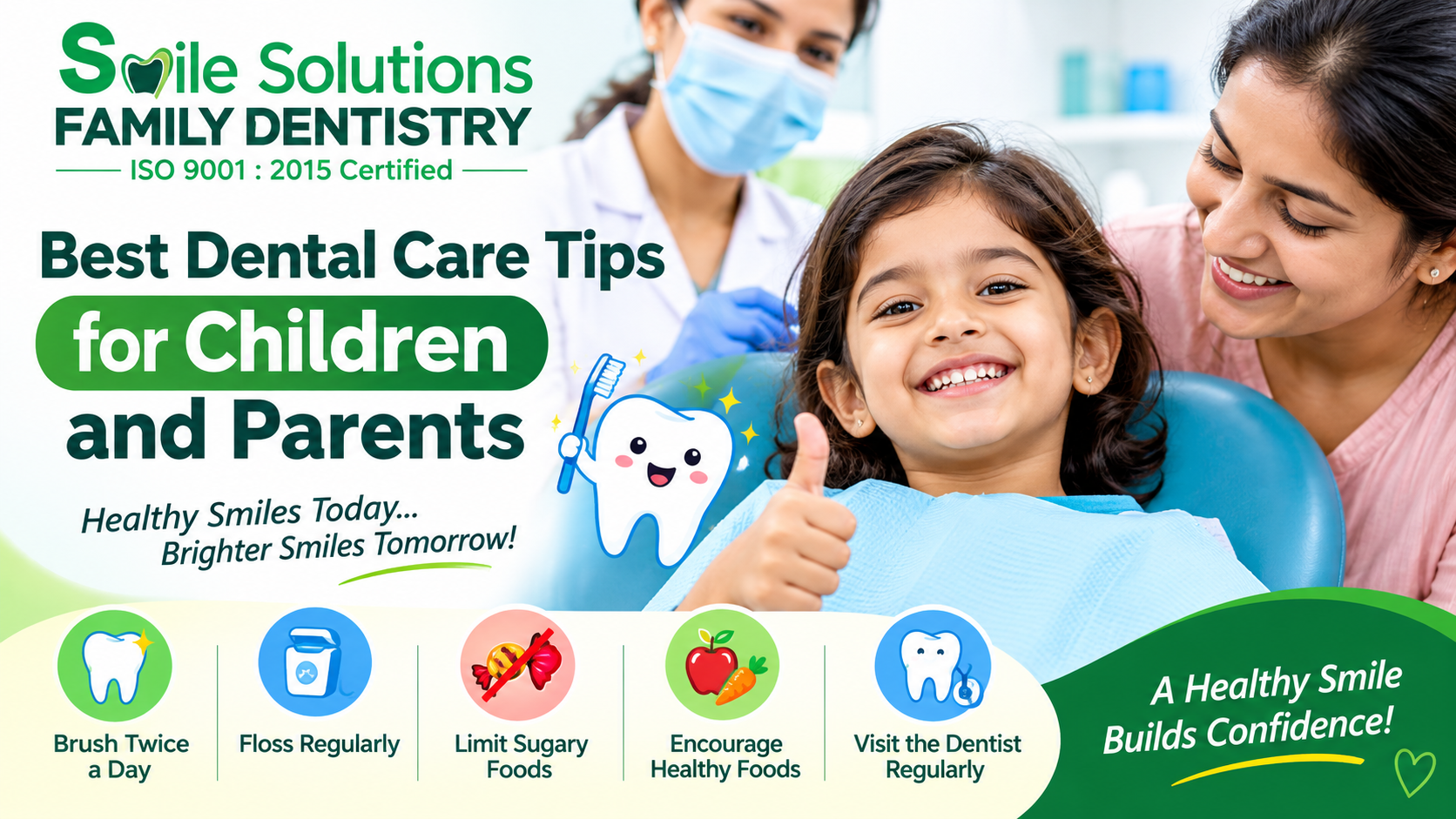
The best dental care for children comes down to six habits: brush twice a day with a fluoride toothpaste, clean between teeth once they touch, limit sugary snacks and drinks, never put a child to bed with a milk or juice bottle, book the first dental visit by the first birthday, and have a dentist check your child every six months. Parents should supervise brushing until about age 7 or 8, because younger children cannot yet clean thoroughly on their own.
Key Takeaways
Table of Contents
Why Children's Dental Care Matters
Many parents assume baby teeth do not matter because they eventually fall out. In reality, primary (baby) teeth hold space for permanent teeth, help children chew and speak clearly, and shape healthy jaw development. Untreated decay in baby teeth can cause pain, infection, missed school days, trouble eating and, in some cases, damage to the permanent tooth developing underneath.
Tooth decay is one of the most common childhood health problems worldwide, according to the World Health Organization, and it is also one of the most preventable. The habits you build at home during the early years often last a lifetime.
As a dentist with over 25 years of clinical experience in Chennai, I see the same pattern in clinic: children who start brushing early, snack wisely and visit the dentist regularly rarely need complex treatment later.
Dental Care by Age: A Simple Guide for Parents
Infants (0 to 12 months)
Toddlers (1 to 3 years)
Preschoolers (3 to 6 years)
School-age children (6 to 12 years)
Teenagers (13 to 18 years)
How to Brush a Child's Teeth Correctly
Good technique matters as much as frequency. Follow these steps:
For a more detailed walkthrough, read our guide on brushing techniques.
Fluoride and Toothpaste: What Parents Should Know
Fluoride strengthens enamel and helps repair early decay before it becomes a cavity. Major dental bodies, including the American Dental Association and the Indian Dental Association, support the use of fluoride toothpaste in children.
|
Child's age |
Amount of fluoride toothpaste |
|
Up to 3 years |
Rice-grain smear |
|
3 to 6 years |
Pea-sized amount |
|
6 years and above |
Pea-sized amount, with supervision |
Safety tips:
Diet and Snacks That Protect Teeth
What your child eats matters as much as how they brush. Decay is driven by how often sugar touches the teeth, not just how much.
Teeth-friendly choices
Limit or avoid
Practical tips
The First Dental Visit
Most dental bodies recommend a first visit by your child's first birthday or within six months of the first tooth appearing. This visit is usually short, gentle and focused on:
How to prepare your child
After the first visit, check-ups every six months help catch problems early, when treatment is simpler and more comfortable.
Sealants, Fluoride Treatments and Other Preventive Care
Habits to Watch: Thumb Sucking, Pacifiers and Mouth Breathing
Dental Emergencies in Children: What to Do
|
Situation |
What to do right away |
|
Toothache |
Rinse with warm water, gently remove any trapped food, and see a dentist the same day. Do not place aspirin on the gum. |
|
Knocked-out permanent tooth |
Pick it up by the crown (not the root), rinse gently if dirty, try to place it back in the socket or keep it in milk, and see a dentist immediately. |
|
Knocked-out baby tooth |
Do not put it back. Control bleeding with clean gauze and see a dentist. |
|
Chipped or broken tooth |
Rinse the mouth, save any fragments, apply a cold compress and see a dentist promptly. |
|
Cut lip, tongue or cheek |
Clean gently, apply pressure with clean gauze and a cold compress. If bleeding does not stop, seek urgent care. |
|
Swelling of the face or gums with fever |
This can signal infection. See a dentist or doctor urgently. |
Dental Care Tips for Parents
Children's oral health is a family effort. Here is how you can lead by example:
When to See a Dentist
Book an appointment without delay if your child has:
Frequently Asked Questions (FAQs)
At what age should a child's first dental visit be?
The first dental visit should happen by your child's first birthday, or within six months of the first tooth erupting. Early visits help prevent problems and make children comfortable with dental care.
How often should children brush their teeth?
Children should brush twice a day for two minutes: once in the morning and once before bed. Parents should supervise or assist until about age 7 or 8.
How much toothpaste should I use for my child?
Use a rice-grain smear of fluoride toothpaste for children under 3, and a pea-sized amount for children aged 3 to 6 and above.
Is fluoride safe for children?
Yes, when used in the correct amount. Fluoride toothpaste strengthens enamel and prevents cavities. Supervise young children so they spit out rather than swallow toothpaste, and store it out of reach.
Do baby teeth really need treatment if they will fall out?
Yes. Baby teeth hold space for permanent teeth and support chewing, speech and growth. Untreated decay can cause pain, infection and affect the permanent teeth.
How can I prevent cavities in my child's teeth?
Brush twice daily with fluoride toothpaste, limit sugary snacks and drinks, avoid bedtime bottles with sweet liquids, consider dental sealants, and visit the dentist every six months.
When should my child start flossing?
Start flossing as soon as two teeth touch each other, usually between ages 2 and 3. Parents will need to help until the child develops the dexterity to floss alone.
What are dental sealants and does my child need them?
Sealants are thin protective coatings applied to the chewing surfaces of back teeth to block out food and bacteria. They are often recommended once permanent molars erupt, around ages 6 and 12.
How do I help my child who is afraid of the dentist?
Stay calm and positive, avoid scary words, schedule visits early in the day, and choose a dental team that is patient and child-friendly. Regular short visits build trust over time.
Which is better for children: manual or electric toothbrush?
Both work well when used correctly. Children may find electric brushes more fun, but a soft manual brush with proper technique is equally effective.
How long should a child use a pacifier or suck their thumb?
Most children outgrow these habits naturally by age 3 to 4. If the habit continues, speak to your dentist, as it can affect tooth alignment and jaw growth.
Where can I find a trusted dentist for my child in Chrompet, Chennai?
Smile Solutions offers family dental care at its Chrompet and Thoraipakkam clinics in Chennai. You can book an appointment through our contact page or call +91-9384877610.
About the Author: Meet Your Doctor
Dr. M. Srikanth, Prosthodontist at Smile Solutions, Chennai
BDS · MDS (Prosthodontics) | Prosthodontist | Implantologist | Cosmetic Dentist
|
Credential |
Details |
|
Experience |
25+ years |
|
Registered since |
2001 |
|
Professional memberships |
4 |
|
Registration number |
Reg. No. 5487 |
|
Licensing council |
Tamil Nadu State Dental Council |
|
Verification status |
✔ State Council Verified |
Excellence in Dental Care, Built Over Two Decades
Academic Qualifications
Areas of Specialization
Professional Memberships
Book Your Family Dental Visit at Smile Solutions, Chennai
Healthy smiles start early. Whether it is your child's first check-up, a cavity concern or preventive care for the whole family, our team at Smile Solutions is here to help.
Smile Solutions Family Dentistry, Chennai
Chrompet Branch No 44, Near Sudar Hospital, Ramachandra Street, Nehru Nagar, Chrompet, Chennai, Tamil Nadu 600044
Thoraipakkam Branch 3/4, 200 Feet Radial Rd, Vinayaganagar, MCN Nagar Extension, Thoraipakkam, Chennai, Tamil Nadu 600097
Phone: +91-9384877610 | 044-43575349
Website: www.smilesolutions.in
Book an appointment: Contact Smile Solutions, Chrompet