Local anaesthesia numbs one area while you stay awake. General puts you to sleep. See what dental work needs, and what to expect. Smile Solutions, Chromepet.
வலி இருக்குமா? (Will it hurt?) It's the first thing most people ask us, and it's a fair question.
Here is the short answer. Local anaesthesia numbs one small area, like the tooth and gum we're working on, and you stay awake and comfortable. General anaesthesia puts you fully to sleep, and it's done in a hospital setting with an anaesthetist. For most dental work, including fillings, root canals and extractions, local anaesthesia is what's used. If you're very nervous, we also offer sedation in the clinic to help you stay relaxed.
I'm Dr Srikanth, and this page explains the differences in plain words, so you know what to expect before you sit in the chair.
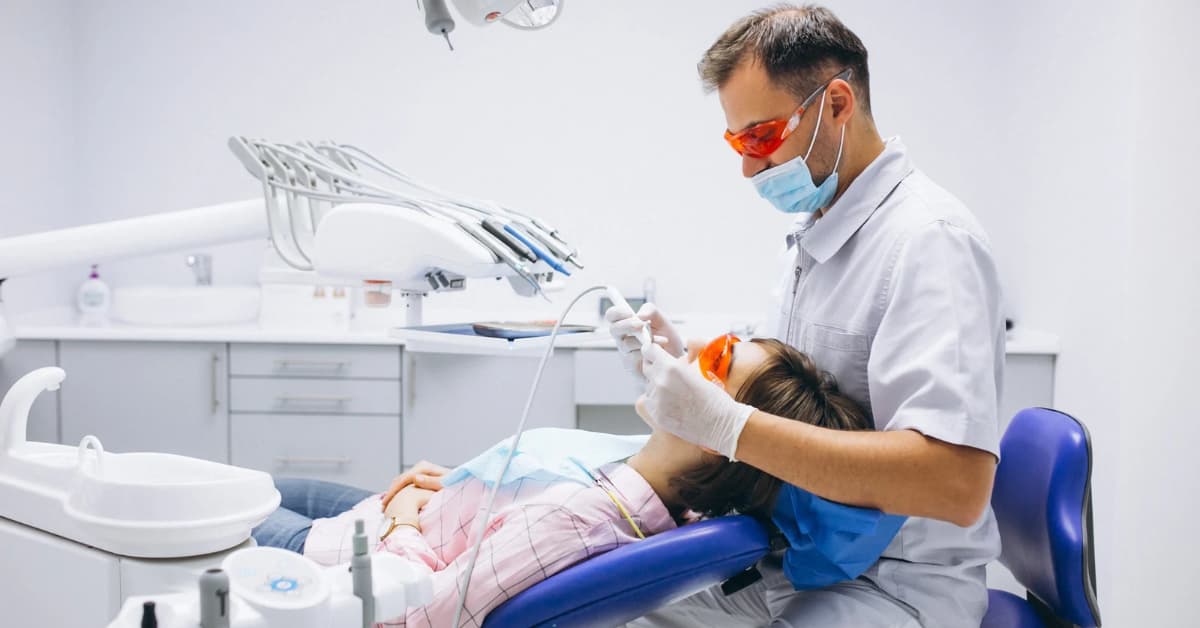
Think of local anaesthesia as switching off the pain in one spot. You're awake, you can hear us, and you can talk to us. You just don't feel pain where we're working.
General anaesthesia switches off your awareness completely. You're asleep, and you don't know anything about the procedure until you wake up.
Side by side:
|
Local Anaesthesia |
General Anaesthesia |
|
|
Are you awake? |
Yes |
No, fully asleep |
|
What gets numbed? |
Only the treated area |
Your whole body |
|
How is it given? |
Small injection or numbing gel |
Medicines through a drip and/or gas |
|
Breathing |
You breathe on your own |
May need breathing support |
|
Who gives it? |
Your dentist |
A trained anaesthetist |
|
Recovery |
Numbness fades in a few hours |
Takes longer, you need someone with you |
|
Used for |
Fillings, root canals, extractions, gum work |
Major or complex surgery, selected cases |
|
Where? |
In the dental clinic |
In a hospital |
If you're unsure which one your treatment needs, just ask us. Call or WhatsApp us on 9384877610 and we'll explain it for your case.
It's the most common way to make dental treatment comfortable, and it's what we use every day.
The medicine blocks the nerves around your tooth from sending pain signals to your brain. Your tooth and the gum around it go numb, and the rest of you carries on as normal.
A small pinch at the start, then a heavy, tingly, "not my tooth" feeling. During treatment you may feel pressure, pushing or vibration. That's normal. It isn't pain. If you do feel anything sharp, tell us straight away and we'll top up the numbness. Nobody should have to sit through pain to be brave.
Usually a couple of hours, sometimes a bit longer, and it can differ from person to person. Your lip and cheek may feel numb after you leave, so don't chew hot food or bite your lip until it wears off.
With general anaesthesia you're completely asleep. Medicines go through a drip or are breathed in as gas, and the anaesthetist watches your breathing, heart rate and oxygen throughout.
You won't remember the procedure. Afterwards you may feel drowsy, sick or have a sore throat. You'll need a family member with you to take you home, and you shouldn't drive or make big decisions that day.
General anaesthesia needs a hospital setup with an anaesthetist. We don't do it in our clinic. If your case ever needs it, we'll assess you and arrange it properly through the right hospital setup.
Awake or asleep. Local: awake. General: asleep.
Pain. Local blocks pain in one area. General means you're unaware of everything.
Area affected. Local affects a tooth and the gum around it. General affects your whole system.
Recovery. Most people go back to work or home normally after a local. After a general, you need a full day of rest and someone to look after you.
Side effects.
Which is safer? We won't tell you one is "safer" across the board. Both are used safely every day when they suit the person and the procedure. Your health, medicines and the treatment all matter. That's why we ask questions before we start.
Almost always, local anaesthesia. Here's how it usually goes:
Fillings. Local. Quick, and you walk out and carry on with your day.
Root canal. Local. Many people are scared of root canals because of what they've heard, but with proper numbing it feels much like having a filling done. The pain people remember is usually from the infection before treatment, not from the treatment.
Tooth extraction. Local. You'll feel pressure and tugging, but not pain.
Wisdom tooth removal. This depends on how the tooth is sitting. Many are done under local. If your tooth is deeply stuck or the case is complex, we'll tell you honestly what's needed, and if you're very anxious we can offer sedation.
Dental implants. Usually local, sometimes with sedation if you prefer to be more relaxed.
Complex oral surgery. Occasionally deeper anaesthesia is considered. We'll assess you first and explain your options.
Yes, in selected cases, but most people never need it. It may be considered for very complex surgery, or for someone who can't cooperate with treatment, for example because of a medical condition or severe fear. It's a decision made after assessment, with a hospital and an anaesthetist involved, and not a casual choice.
If you've been told you need general anaesthesia and you're not sure why, come and ask us. A second opinion costs you nothing.
Many people mix up sedation and general anaesthesia. They're different.
|
Local |
Sedation |
General |
|
|
Awake? |
Yes |
Relaxed, usually responds to us |
No |
|
Main purpose |
Block pain |
Calm your nerves |
Full sleep |
|
Pain control |
Yes, in the treated area |
Used along with local |
Yes |
|
Dental use |
Very common |
For nervous patients or longer treatments |
Selected complex cases |
|
Where |
Our clinic |
Our clinic, when suitable |
Hospital |
Is sedation the same as general anaesthesia? No. With sedation you're relaxed and drowsy, and we still numb the area with local anaesthesia so the treatment is comfortable. It's a good option if you're scared of dentists, have had bad experiences before, or need a longer procedure. We'll check whether it suits you first.
Local: A small pinch for a few seconds. Then heaviness and tingling. During treatment, pressure but no pain. After treatment, numbness that fades slowly.
General: You go to sleep, and the next thing you know it's done. You wake up groggy.
We take the injection fear seriously, because it's the biggest reason people delay treatment. We use numbing gel first, inject slowly, and tell you what's coming. If you need a break, raise your hand and we stop.
Please tell us about:
Bring your tablets or a photo of the prescription if you're not sure of the names. It takes a minute and it keeps you safe.
The choice depends on your procedure and your health, and we'll explain your options before you decide anything.
Children. Most children's dental work is done with local anaesthesia, and a gentle, patient approach goes a long way. Bring your child for a short first visit so they can meet us without any treatment.
Elderly parents. Tell us about their medicines and health conditions, such as BP, sugar or heart problems. Bring their prescriptions. We'll plan their treatment around that and take it at a comfortable pace.
Local numbs one area while you're awake. General puts you fully to sleep.
Yes. You're awake and comfortable, and you can talk to us.
No. You're asleep and unaware.
Both are safe when they suit the patient and are given properly. They carry different risks, and general anaesthesia needs more monitoring. Your health history decides what's right.
It blocks pain in the treated area. You may still feel pressure or movement. Tell us if you feel anything sharp.
Usually a few hours, and it varies from person to person.
Local anaesthesia.
Local anaesthesia in most cases.
Yes, in selected complex cases, arranged at a hospital with an anaesthetist.
No. With sedation you're relaxed but not fully asleep, and it's used along with local anaesthesia.
Often local, with sedation as an option. Complex cases may need more, depending on how the tooth is positioned.
By looking at your procedure, your medical history, your medicines and how anxious you feel. We talk it through with you first.
Every mouth and every worry is different. If you're nervous about the injection, putting off a wisdom tooth, or looking after a child or a parent, come and talk to us first. No pressure and no rush.
Dr Srikanth, BDS, MDS (Prosthodontics)
Smile Solutions Family Dentistry, Chromepet, Chennai
இன்றே அழையுங்கள் (Call us today)
📞 Phone & WhatsApp: 9384877610
Clinic hours
Monday to Saturday: 9:15 AM to 9:30 PM
Sunday: 9:15 AM to 1:30 PM
Book a Dental Consultation | WhatsApp Us
Whether it's your own tooth or a family member's, we're happy to explain things in English or Tamil. தமிழிலும் பேசலாம்.